Overview
A fit test checks that a specific respirator seals to a specific worker's face. OSHA requires one for every employee who wears a tight-fitting respirator, under 29 CFR 1910.134. The test sits inside a larger set of requirements: a written program, a medical evaluation before the respirator is worn, an accepted test protocol, an intact seal, and a record for each worker.
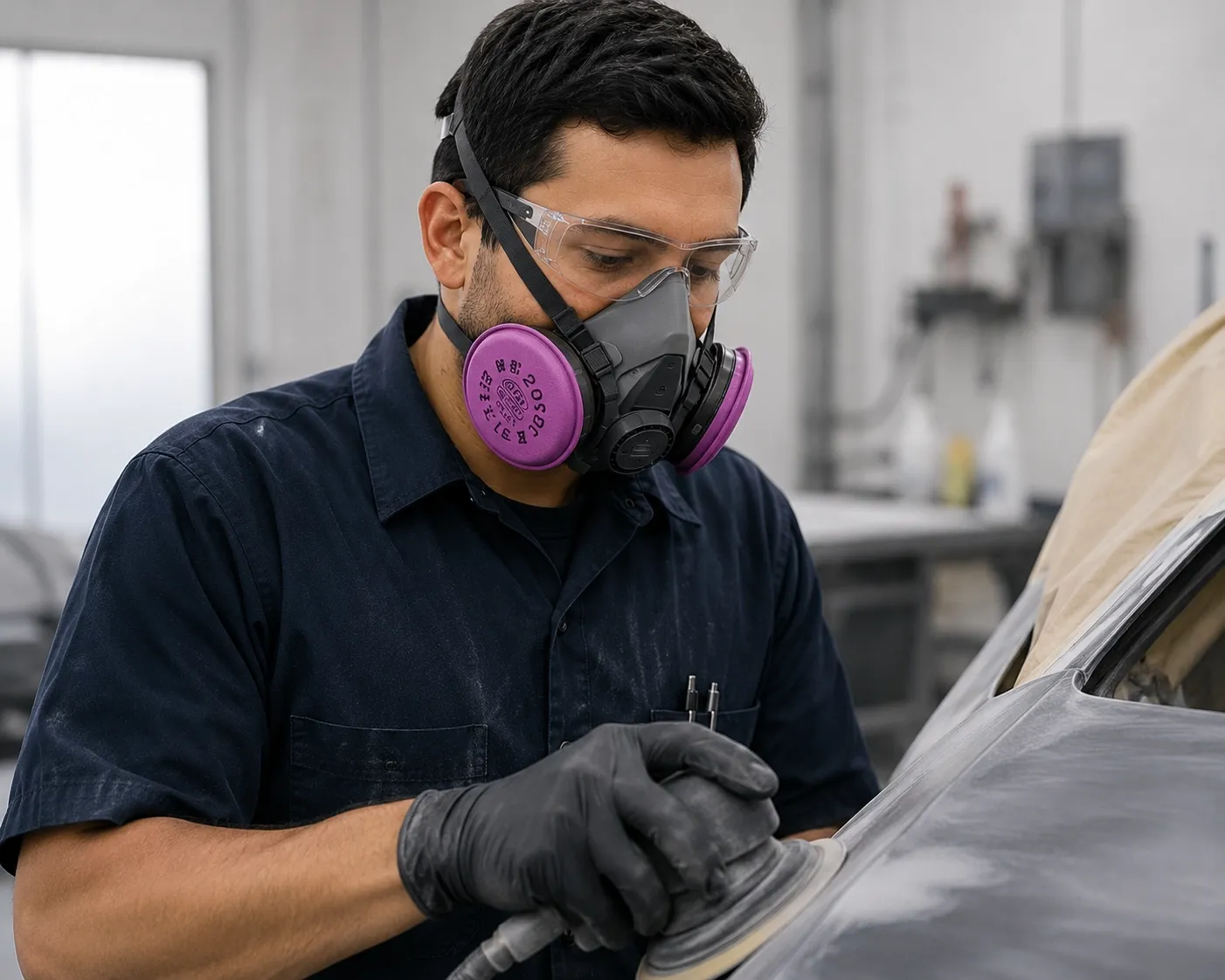
Who needs a fit test
Any worker who is required to wear a tight-fitting respirator. In a dealership body shop that usually includes painters, prep technicians, anyone spraying isocyanates, solvents, or two-part urethanes, and anyone sandblasting or grinding under respiratory protection.
The test is required before the worker first uses the respirator, whenever a different facepiece is used, and at least every 12 months after that (29 CFR 1910.134(f)(2)).
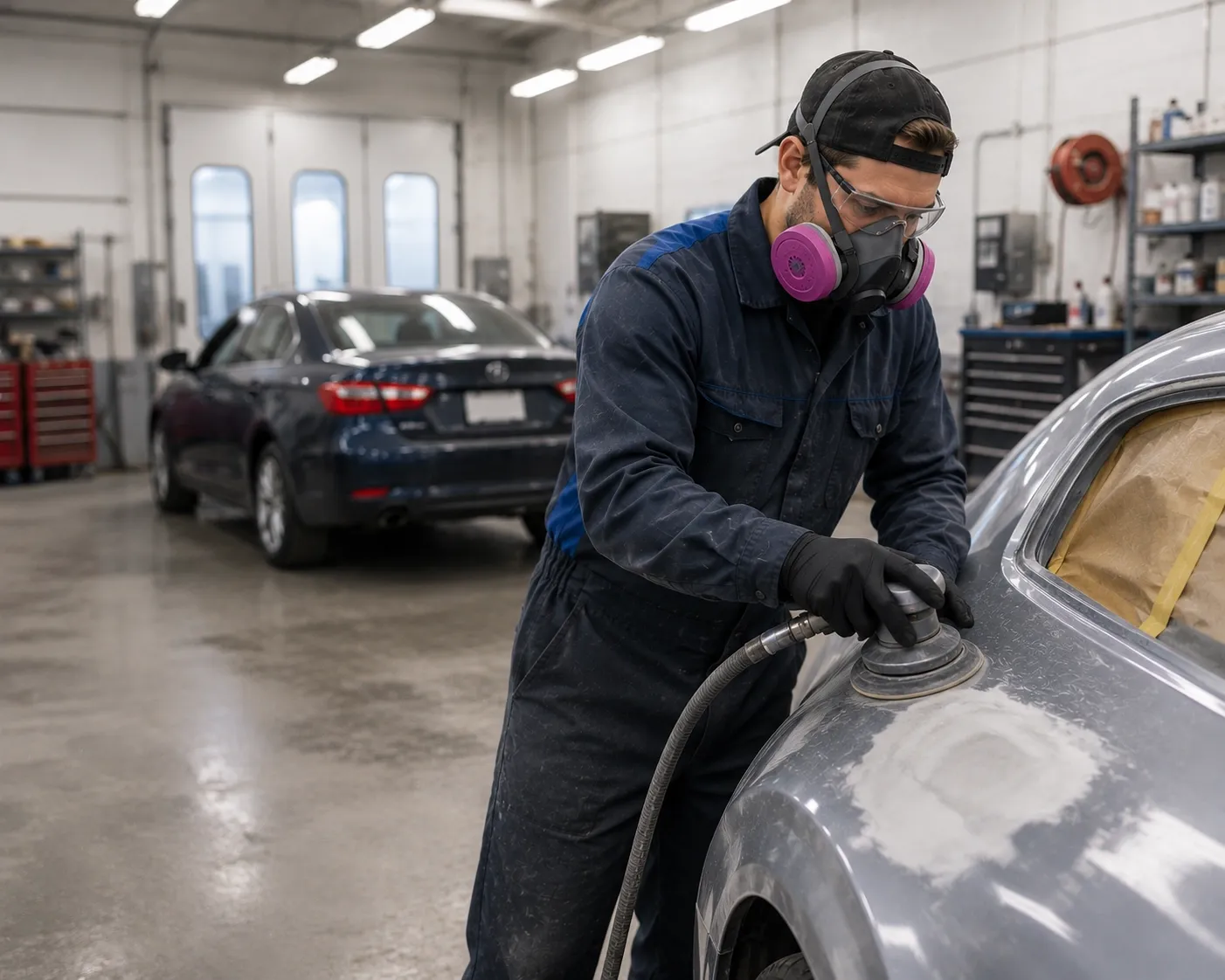
What the standard requires
These six requirements apply to any employer whose workers wear tight-fitting respirators.
Written respiratory protection program
29 CFR 1910.134(c)
Before anyone is tested, the employer needs a written program with a named program administrator. It covers respirator selection, medical evaluation, fit testing, training, and maintenance. Fit testing is one part of that program.
Medical evaluation
29 CFR 1910.134(e)
Each worker must be medically evaluated and cleared by a physician or other licensed health-care professional before being fit tested or wearing a respirator on the job. Breathing through a respirator puts a physical load on the wearer, so the clearance comes first.
When to test
29 CFR 1910.134(f)(2)
A fit test is required before a worker first uses a tight-fitting respirator, whenever a different facepiece is used, and at least every 12 months after that.
Accepted test protocols
29 CFR 1910.134, Appendix A
Tests must follow an OSHA-accepted qualitative method (isoamyl acetate, saccharin, Bitrex, or irritant smoke) or quantitative method, such as PortaCount or Quantifit, including the required sequence of exercises. A result applies only to the make, model, and size tested.
Facepiece seal
29 CFR 1910.134(g)(1)(i)
A tight-fitting respirator can't be worn with facial hair or anything else that crosses the sealing surface. Conditions that can affect the seal, such as facial hair, scarring, dental work, or weight change, have to be considered at the time of the test.
Fit-test records
29 CFR 1910.134(m)(2)
The employer must record each fit test: the worker's name, the type of test, the date, the respirator make, model, and size, and the result. The record has to be available to OSHA and to the worker.
Test methods and fit factors
Appendix A of 1910.134 lists the accepted protocols. A qualitative test is pass or fail, based on whether the wearer detects a test agent. A quantitative test uses an instrument to measure the fit factor: the concentration of a test agent outside the facepiece divided by the concentration that leaks inside it.
| Test type | How it works | When it can be used |
|---|---|---|
| Qualitative (QLFT) | Wearer reports whether they detect isoamyl acetate, saccharin, Bitrex, or irritant smoke | Negative-pressure air-purifying respirators that need a fit factor of 100 or less |
| Quantitative (QNFT) | An instrument such as a PortaCount or Quantifit measures leakage into the facepiece | Any tight-fitting respirator, and required where a fit factor above 100 is needed |
Minimum fit factors for a quantitative test
29 CFR 1910.134(f)(7)
| Respirator | Minimum fit factor |
|---|---|
| Tight-fitting half facepiece | 100 |
| Tight-fitting full facepiece | 500 |
A pass applies to one facepiece
The result covers the make, model, and size tested. A worker who changes to a different respirator needs a new test on that model.
Questions
Which employees need fit testing?
Any worker required to wear a tight-fitting respirator on the job. In a dealership body shop that usually means painters, prep technicians, anyone spraying isocyanates, solvents, or two-part urethanes, and anyone sandblasting or grinding under respiratory protection. 29 CFR 1910.134(f) requires a test before first use and at least once a year after that.
Is a qualitative or quantitative test required?
A qualitative test (QLFT) relies on the wearer detecting a test agent such as Bitrex or saccharin. It may be used only for negative-pressure air-purifying respirators that need to reach a fit factor of 100 or less. A quantitative test (QNFT) uses an instrument such as a PortaCount or Quantifit and is required when a higher fit factor is needed, as with a full-facepiece negative-pressure respirator relied on above that level.
Can a worker with a beard wear a tight-fitting respirator?
No. 29 CFR 1910.134(g)(1)(i) prohibits tight-fitting respirators when anything interferes with the seal between face and facepiece, so the worker must be clean-shaven where the facepiece seals, including on the day of the test. Workers who keep facial hair commonly use a loose-fitting powered air-purifying respirator (PAPR), which doesn't depend on a tight seal.
How long must fit-test records be kept?
Until the next fit test is administered, which is at most 12 months later. Many employers keep them longer so each worker has a complete testing history.
Does one fit test cover every respirator?
No. A fit test applies to the make, model, and size of the facepiece tested. A worker who switches to a different model must be retested on that model. Workers are also retested at least once a year, and whenever a physical change such as weight change, dental work, facial surgery, or scarring could affect the seal.
Who can perform a fit test?
OSHA doesn't require a specific certification, but the person giving the test must carry out the chosen protocol correctly. Dealerships use either a trained in-house administrator or an outside provider. In both cases the employer stays responsible for the written program, the medical evaluations, and the records.